For farmers
What Farmci does on your farm.
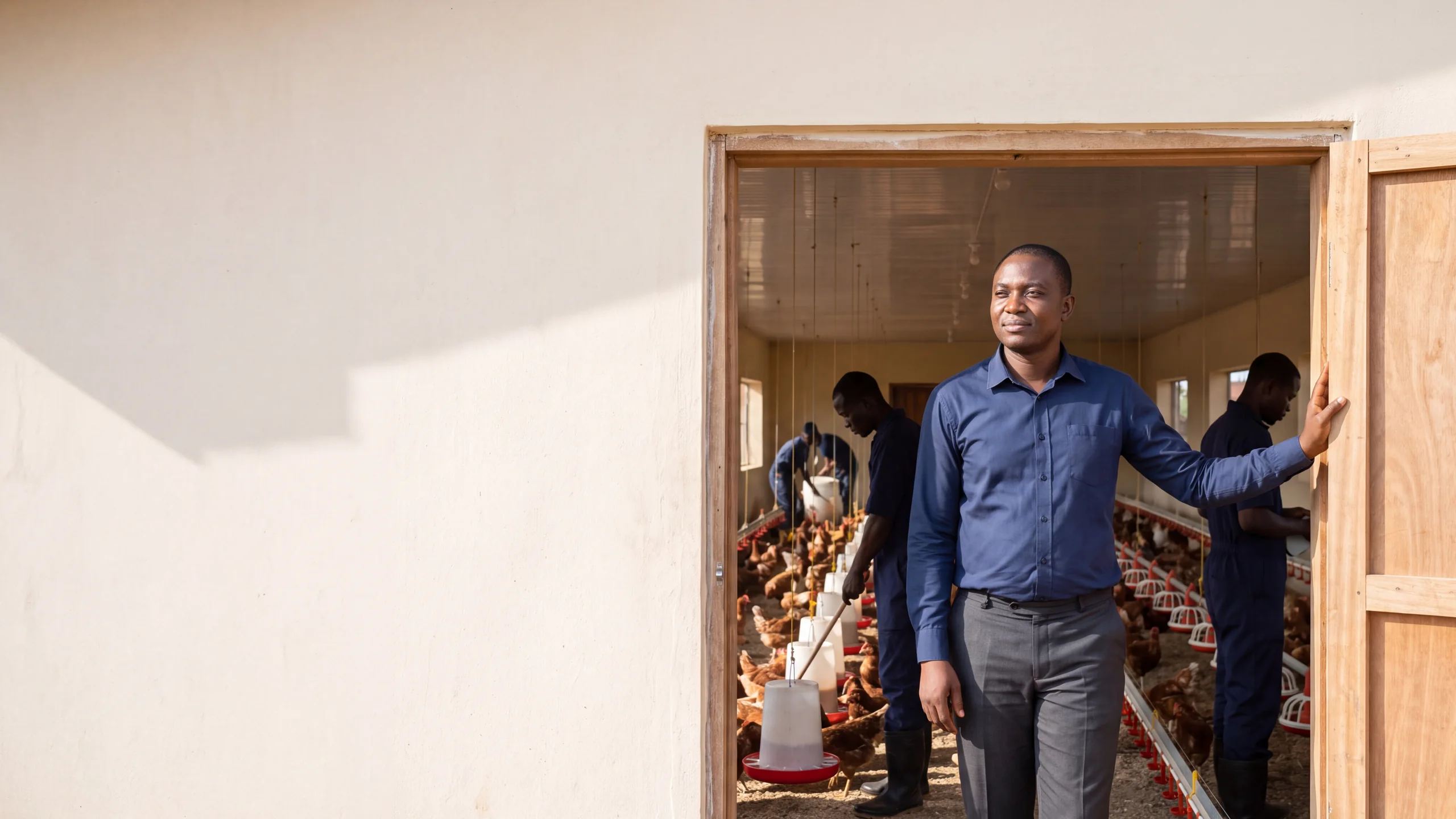
Farmci works with poultry, pig and fish operations that want a clearer view of the conditions shaping a production cycle. This is what that looks like on a working farm, from the first visit to the record at the end of it.
What Farmci does on your farm
We watch the conditions that can change the outcome of your cycle.
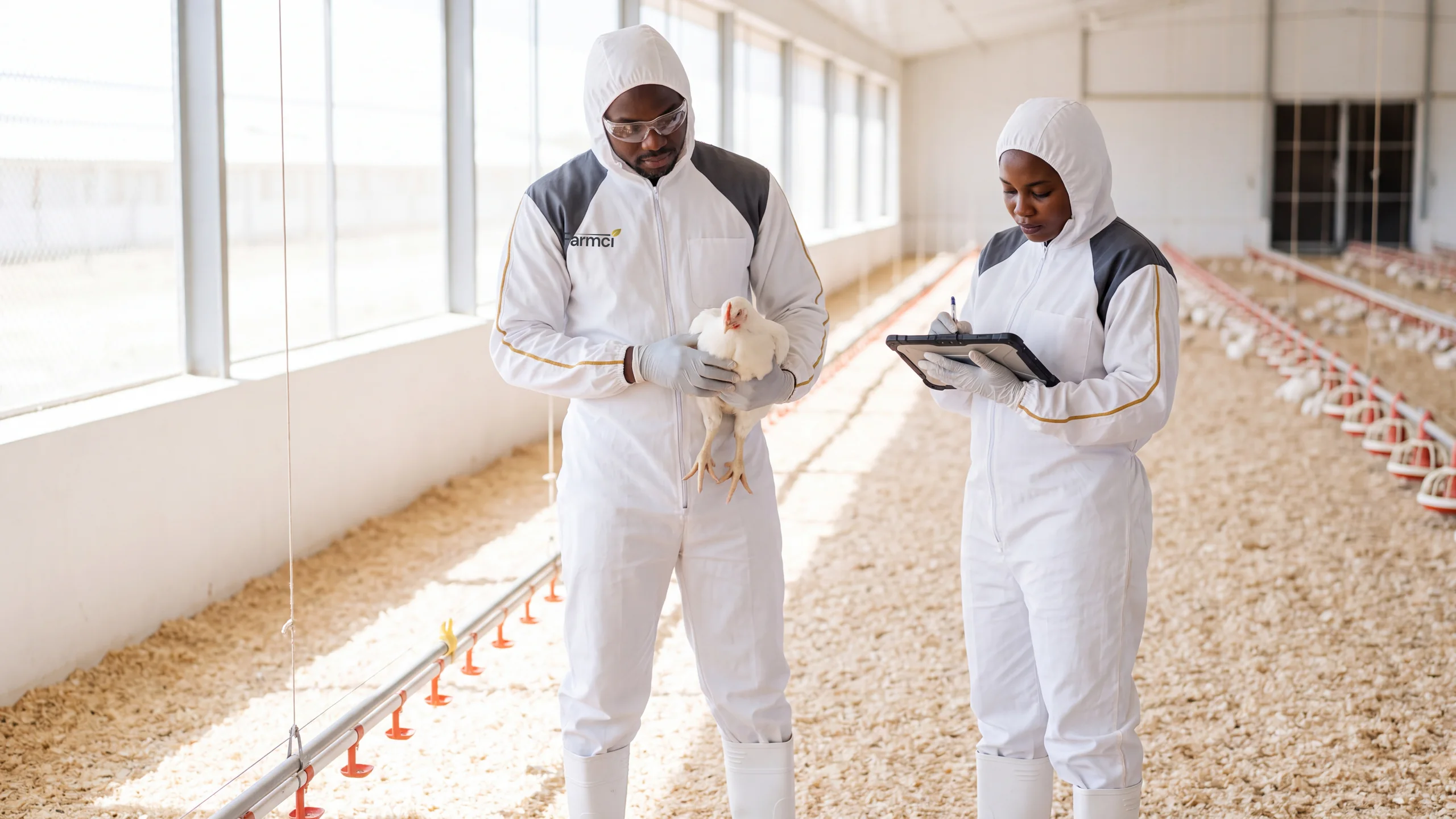
Farmci places connected sensors in a house or pond and brings together the readings a farm needs to check: temperature, humidity, air quality, water conditions, feed and water intake. It gives you a clearer basis for deciding what to inspect, adjust or plan next.
Every cycle you run this way also builds a written record of how the farm performed. That record is what a bank or an insurer is able to read, and most livestock farms have no way of producing one.
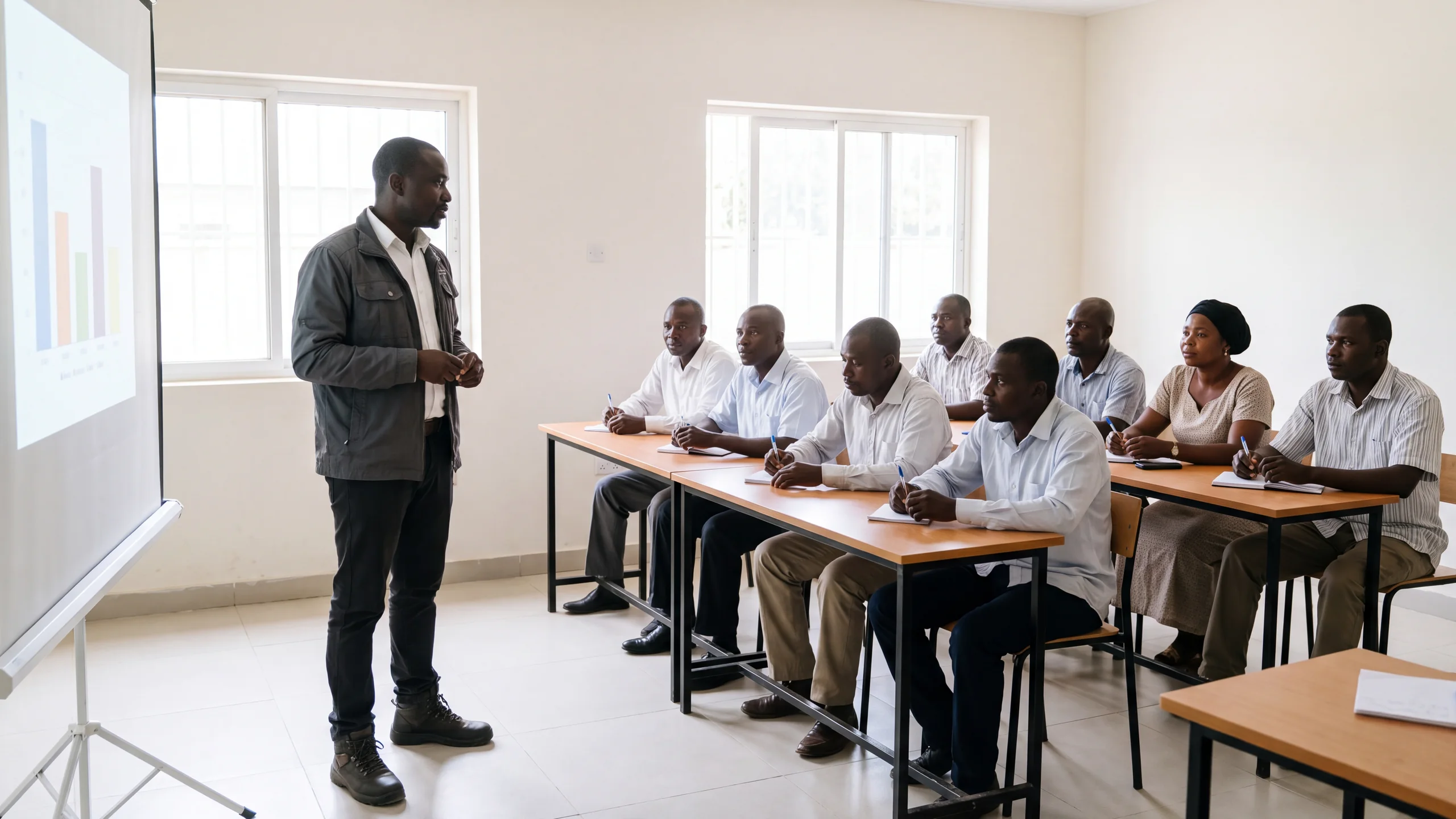
Read how Farmci worksWhat working with Farmci looks like.

What happens next
Three steps, and no obligation on either side.
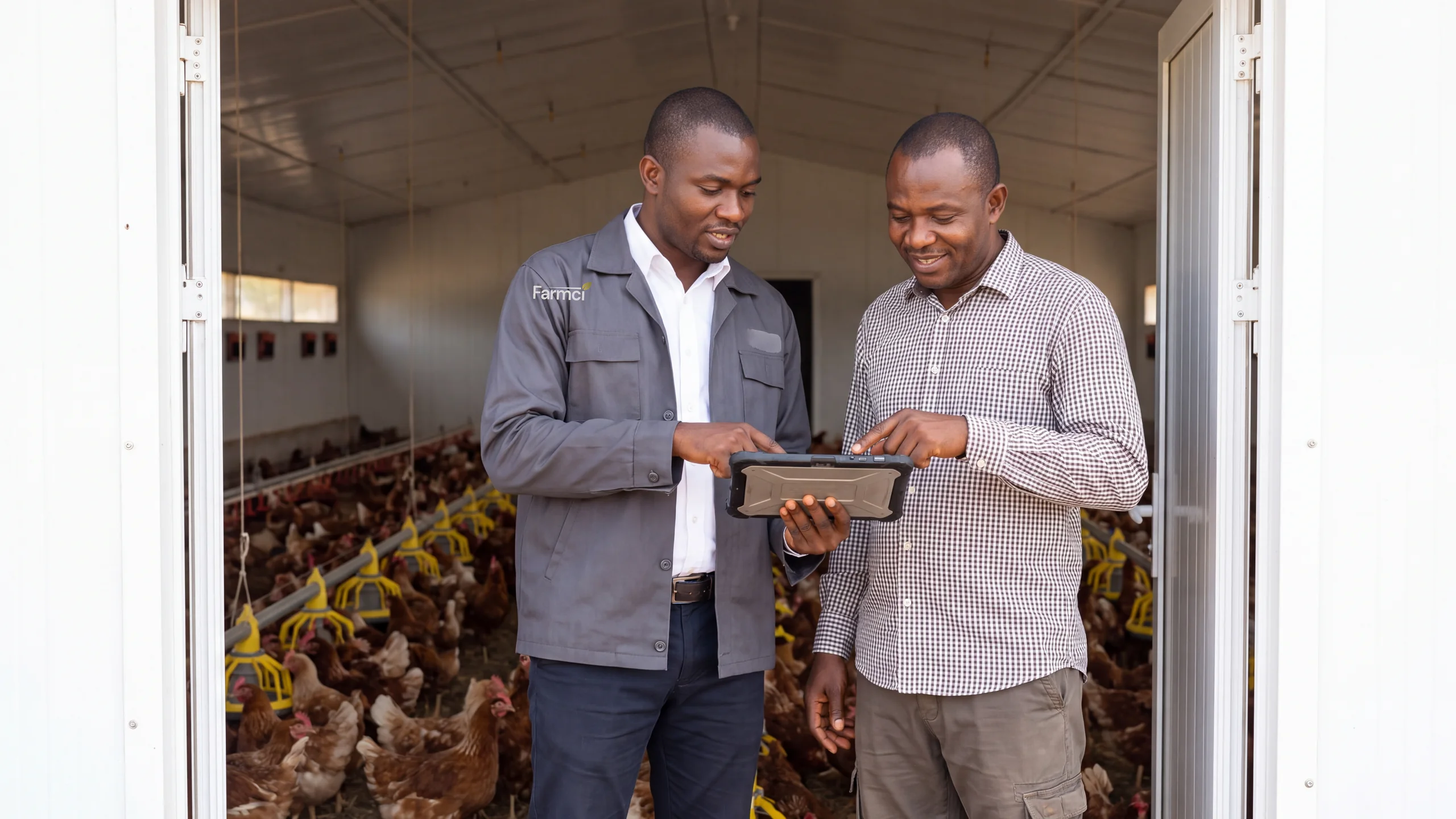
The first conversation works out whether Farmci can be useful on your farm. It carries no offer of credit, and a farm visit follows only if there is a fit.
- 01
Share the farm details
Tell us the species, scale, location, and the condition you want to improve.
- 02
We review the fit
Farmci reviews the production context and comes back within five working days.
- 03
Visit if it makes sense
If there is a practical fit, the next step is a visit to understand the working environment.
Step one
Tell us what you farm.
Six fields: the species, the scale, where the farm is, and what you would like to improve. We come back within five working days.